How high can PCR content go before quality drops?
Every supplier will quote you 100% post-consumer recycled film. Far fewer will run it week after week at consistent gauge, seal strength and colour. The useful question is not what the maximum is, but where the curve turns — and what you have to give up on either side of it.
What PCR actually is when it arrives
Virgin polyethylene is a specified material: known melt flow index, known density, known additive package, batch to batch. Post-consumer recyclate is a recovered material, and that difference explains everything downstream.
Recyclate arrives with variation in melt flow index between lots, colour that ranges from grey to grey-brown depending on the input stream, residual contamination from labels, adhesives and non-target polymers, and a degree of thermal history — the polymer chains have already been through at least one melt cycle, so the molecular weight distribution is not what a virgin datasheet describes.
None of that makes it unusable. It makes it a material that has to be compounded and controlled rather than simply poured into a hopper.
What changes as the percentage rises
Up to about 30%. Largely uneventful on a well-run line. Mechanical properties stay close to virgin, the colour shift is visible but easily handled with pigment, and the process window barely moves. If your only driver is a recycled-content threshold such as the UK Plastic Packaging Tax, this is comfortable territory.
30% to 50%. Bubble stability becomes the first thing you notice — melt strength drops and the process window narrows. Gel count rises, which shows up as visual specks and, more importantly, as weak points in a seal. Dart impact starts to fall measurably. All manageable with the right screw configuration and filtration, but it is now a process that needs attention rather than one that runs itself.
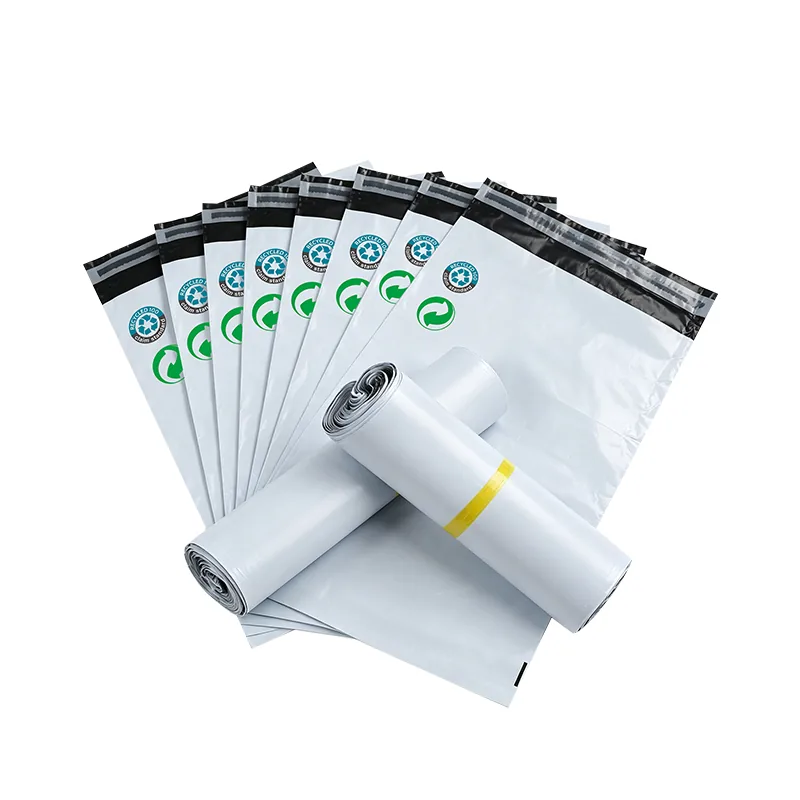
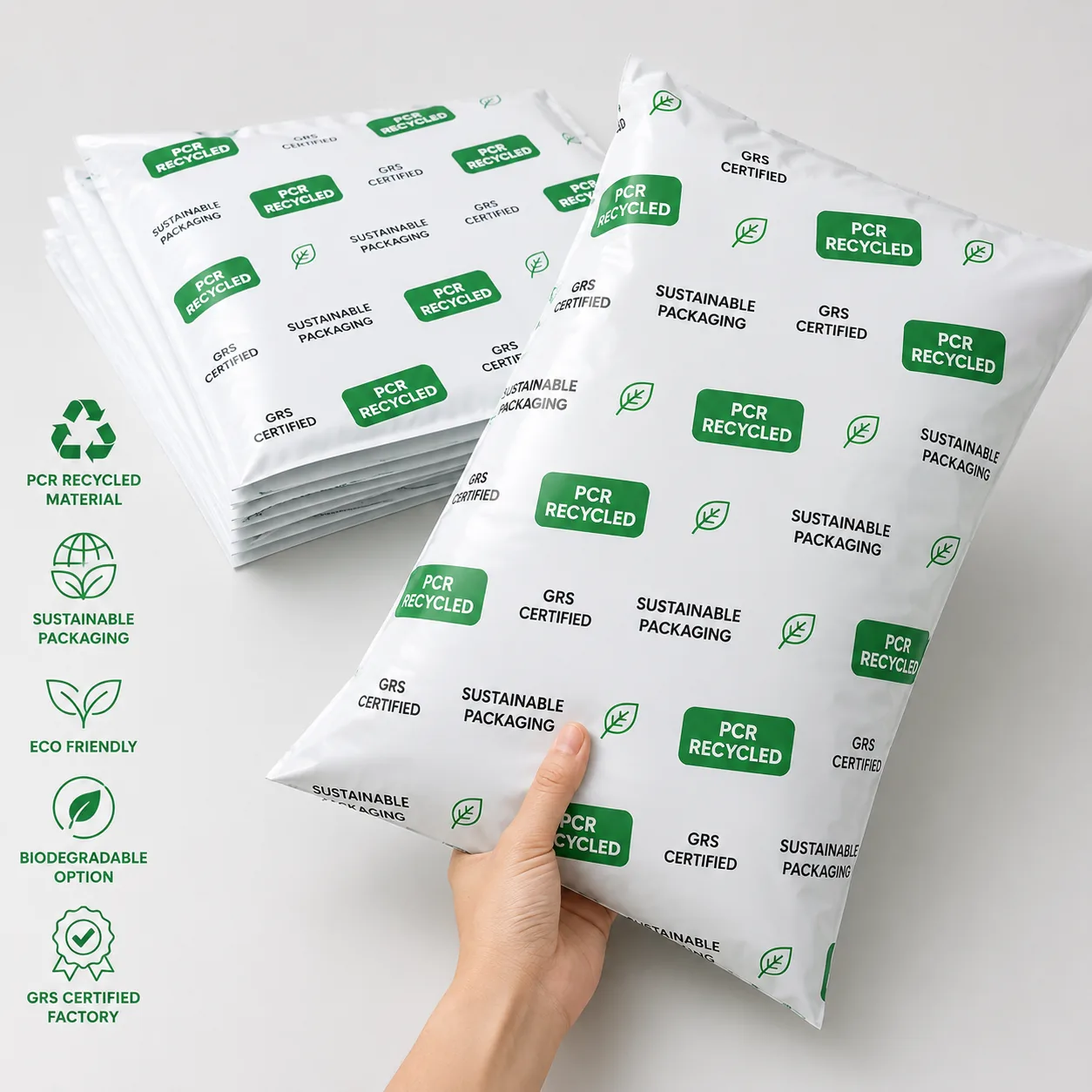
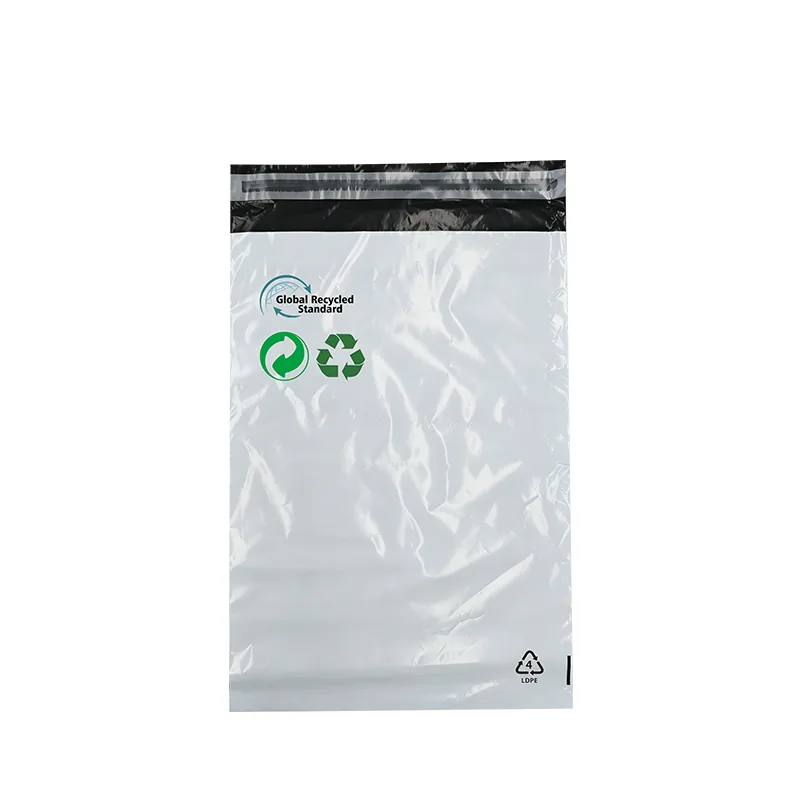
50% to 70%. This is where compounding stops being optional. Melt strength, gel count and colour consistency all need active management, and the resin has to be filtered and homogenised before it reaches the extruder rather than blended at the hopper. Run properly, film in this band performs well enough for bin liners, refuse sacks and mailing bags — including the tear and load performance those applications demand. This is where we set our stable production ceiling.
Above 70%. Achievable as a sample or a short run. Difficult to guarantee across a rolling production programme, because every source of variation in the input stream now lands directly on the finished film with no virgin content left to buffer it. Suppliers advertising 100% PCR as standard are usually quoting a capability, not a specification they will hold to on a quality complaint.
Why in-house compounding is the whole argument
The difference between a supplier who can hold 70% and one who cannot is almost always what happens before the extruder.
Buying stock film means inheriting somebody else's blend and somebody else's variation. Compounding the film formulation within our own group means the recyclate is filtered, homogenised and adjusted for melt flow before it ever reaches the blown-film line — and when a batch of recyclate comes in off-spec, the correction happens at the compounding stage instead of showing up in your delivery.
That is also what makes GRS chain-of-custody meaningful rather than paperwork. Certified recycled content that cannot be traced to a specific input stream is a number on a document. See how the material chain is set up.
How to write the specification
- Specify a target with a tolerance, not a single figure. "Minimum 50% PCR" is testable. "50% PCR" is an argument waiting to happen.
- Specify the performance, not just the percentage — dart impact, seal strength, tear resistance. Recycled content is a means, not the product requirement.
- Accept the colour. Insisting on virgin-white at high PCR forces heavy pigment loading, which costs money and can mask the very defects you want to see.
- Ask for GRS documentation at batch level, not a single type certificate.
- Run a line trial before committing volume. Seal parameters shift with PCR content; better to find that on a trial than on a production run.
Send us the current specification and the application. We will tell you what percentage that structure will actually hold in repeat production — including when the honest answer is lower than you hoped. Request a technical review.
Common questions
Can you produce 100% PCR film?
As a sample or a short run, often yes. As a rolling production programme with consistent gauge, seal strength and colour, no — and neither can most suppliers who advertise it. We hold 30% to 70% as stable, repeatable production, which is the honest ceiling on a demanding film.
Does PCR content weaken the film?
It changes it. Up to about 30% the mechanical properties stay close to virgin. Between 30% and 70% melt strength, gel count and dart impact all need active management through compounding and filtration. Properly compounded film at 50-70% PCR performs well in bin liners, refuse sacks and mailing bags.
Why is recycled film grey?
Post-consumer recyclate comes from mixed input streams, so the base colour is grey to grey-brown. It can be pigmented, but heavy pigment loading at high PCR adds cost and can hide defects. Accepting the natural colour is usually the better trade.
Where to go next
- PCR drawstring bags
- PCR poly mailers
- Manufacturing and materials
- PCR vs compostable vs mono-material
- Reusable bag materials: nonwoven, rPET, cotton
- EU PPWR packaging requirements
We answer every enquiry within 12 hours and issue a detailed quotation within 24 hours. Send us a specification.