Matching packaging film to the food inside
The right film is decided by what is in the bag: oil oxidises, moisture migrates, aromas leak and CO2 escapes, each at a different speed. This guide maps common food types to the structures that protect them - without selling you more barrier than the shelf life needs.
Read the product first
Four numbers decide the film: fat content, moisture activity, required shelf life and storage temperature. A nut bar and a frozen vegetable both call themselves snacks, but one is oxygen-driven and the other is moisture-driven - they need different structures.
High-fat and oxygen-sensitive foods
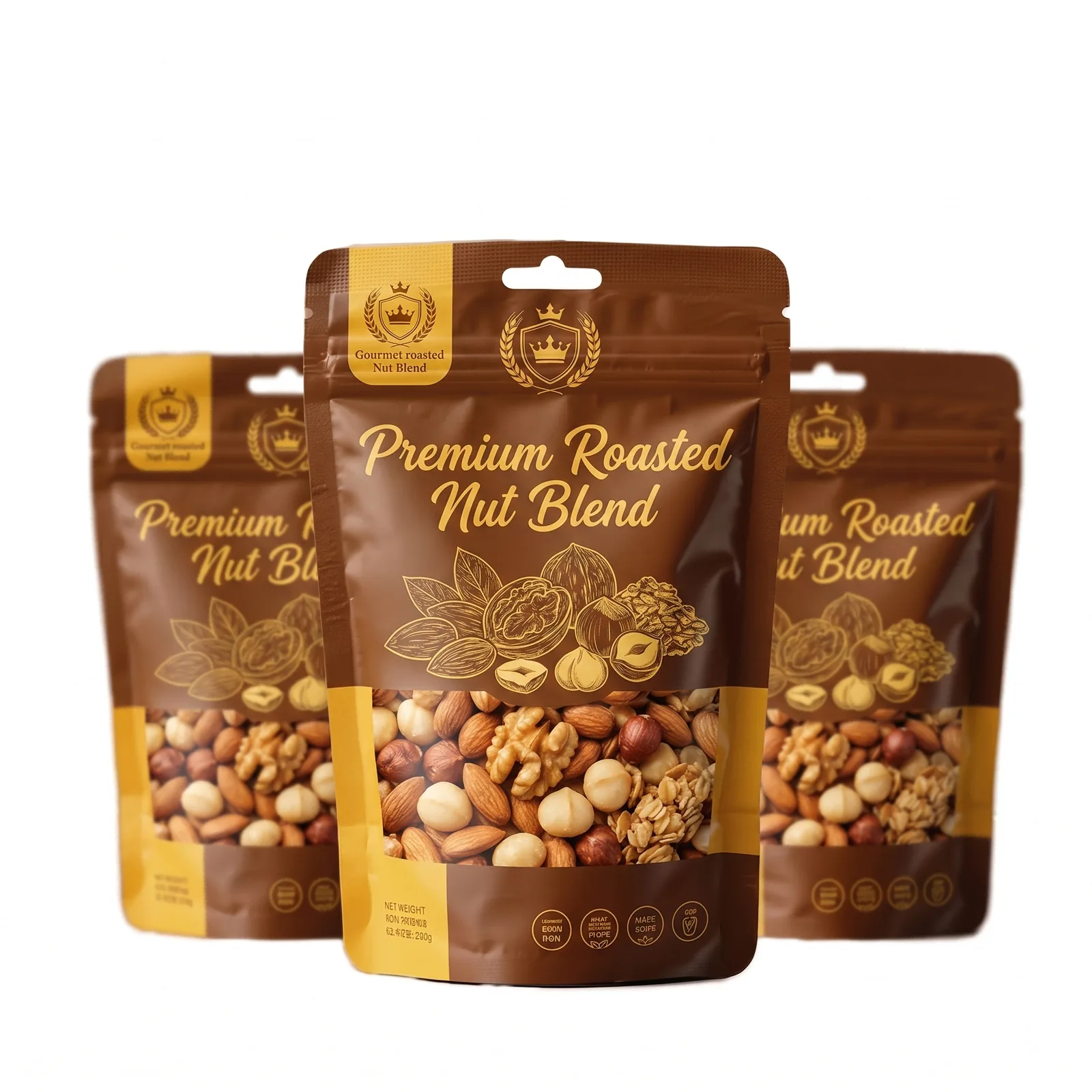
Nuts, coffee, fried snacks and pet food oxidise on contact with oxygen. Foil laminates (PET/AL/PE) give the longest shelf life; metallised PET (PET/VMPET/PE) gives near-foil barrier at lower cost with better flex-crack resistance; and EVOH inside a multi-layer is the clear-film option where foil is not wanted.
High-moisture and wet foods
Meat, cheese and wet product need moisture barrier and often vacuum or modified-atmosphere formats. Here the seal and the water-vapour barrier matter as much as oxygen, and structure choices like PA/EVOH must be protected from wet-contact barrier loss.
Dry and low-risk foods
Dry snacks, bakery and non-fat product run on simpler and cheaper structures: OPP, PE or light laminates. This is where recyclable mono-material designs make sense - single-polymer films can carry enough barrier for dry goods and enter the recycling stream.
Sustainability without losing shelf life
Mono-PE recyclable structures work for many dry and short-shelf-life foods; where shelf life or a wet environment demands barrier, a coated or multi-layer solution is the honest answer. We will tell you which claim is defensible for your market.
Frequently asked questions
How do I know if my product needs a foil barrier?
If it is high-fat, high-oxygen-sensitive, or needs 12+ month shelf life, foil or metallised structures are the standard answer. Tell us the product, weight and target shelf life and we will spec it.
What is the difference between foil and metallised film?
Foil (PET/AL/PE) is the highest barrier; metallised PET gives near-foil barrier at lower cost and handles flexing better.
Can I use recyclable mono-PE for food?
Yes, for many dry and short-shelf-life foods; barrier is restored by coating. Wet, long-shelf-life or high-fat products usually need more structure.
Do you provide food-contact compliance documents?
Yes - food-contact compliant materials produced under BRC and ISO 22000, with batch traceability and test reports on request.
How do I get a quote?
Send product type, weight, fill volume, target shelf life and artwork needs - quote within 24 hours, samples in 5-7 working days.