
Pet food and treat packaging
Pet food is one of the most demanding jobs in flexible packaging: kibble is loaded with fat that oxidises, treats lose aroma and moisture fast, and every gram you lose to staling comes straight out of the bag you sold. This page covers the formats, film structures and rules that work when you are packaging for dogs, cats and small animals.
What pet food packaging actually has to do
Dry kibble contains 15-25% fat and oxidises quickly once oxygen reaches it; that is what turns rancid, not old age. Wet and semi-moist food is moisture-sensitive, and freeze-dried treats are the worst case - they rehydrate on contact with air. A bag therefore has to control three things at once: oxygen ingress, water-vapour transfer and light.
The same bag also has to survive logistics: kibble bags are heavy, drop from pallets, and sit in warehouses for months before a retailer opens them. Seal strength and puncture resistance matter as much as barrier, which is why we spec film on real handling conditions, not just on a spec sheet.
Formats we produce
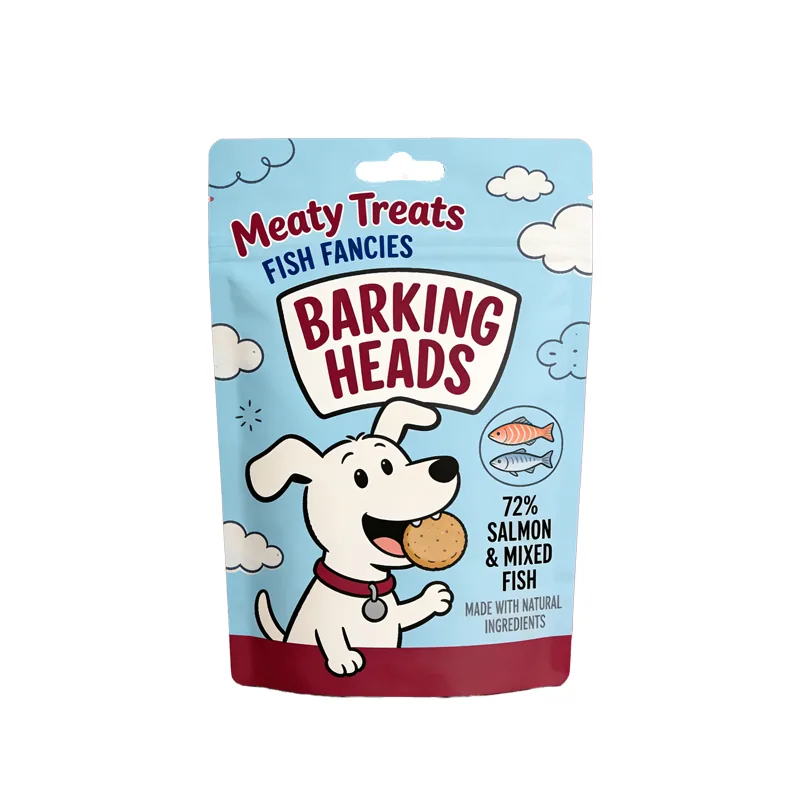
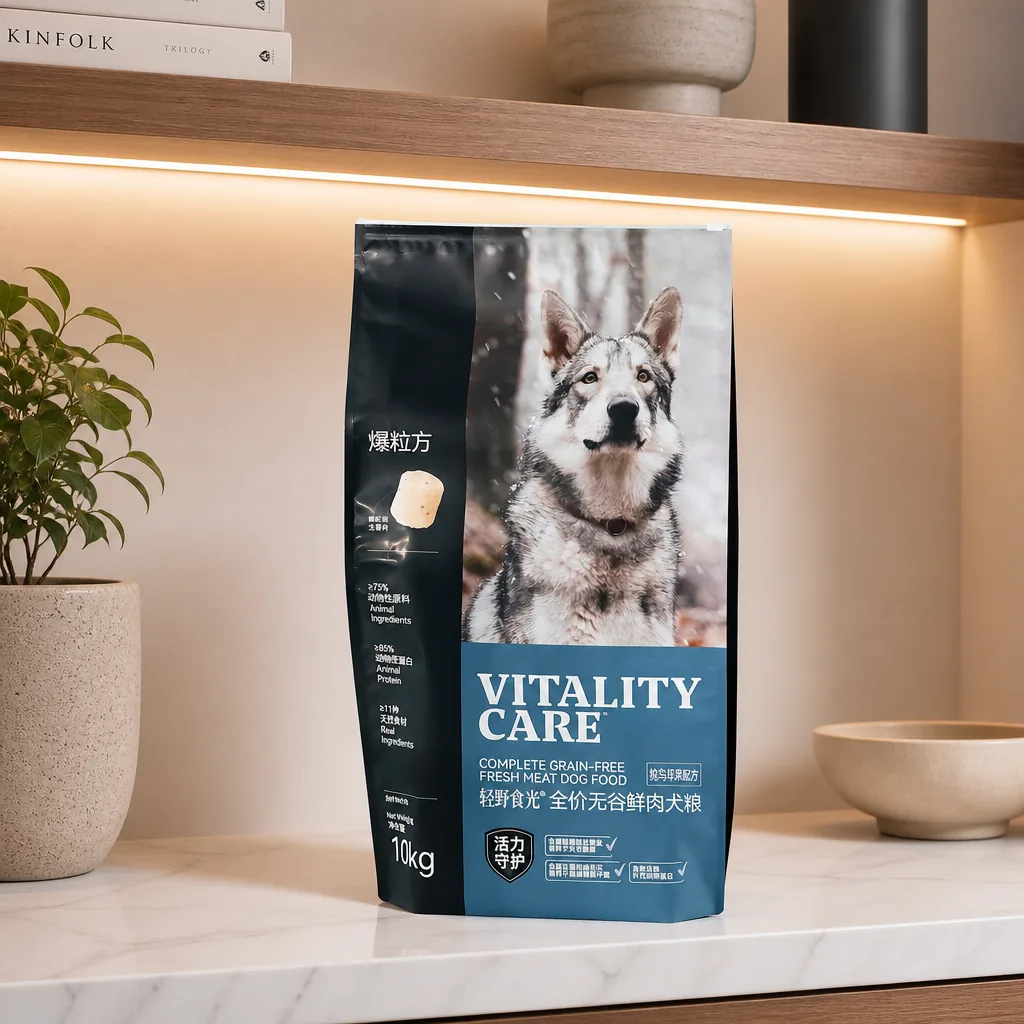
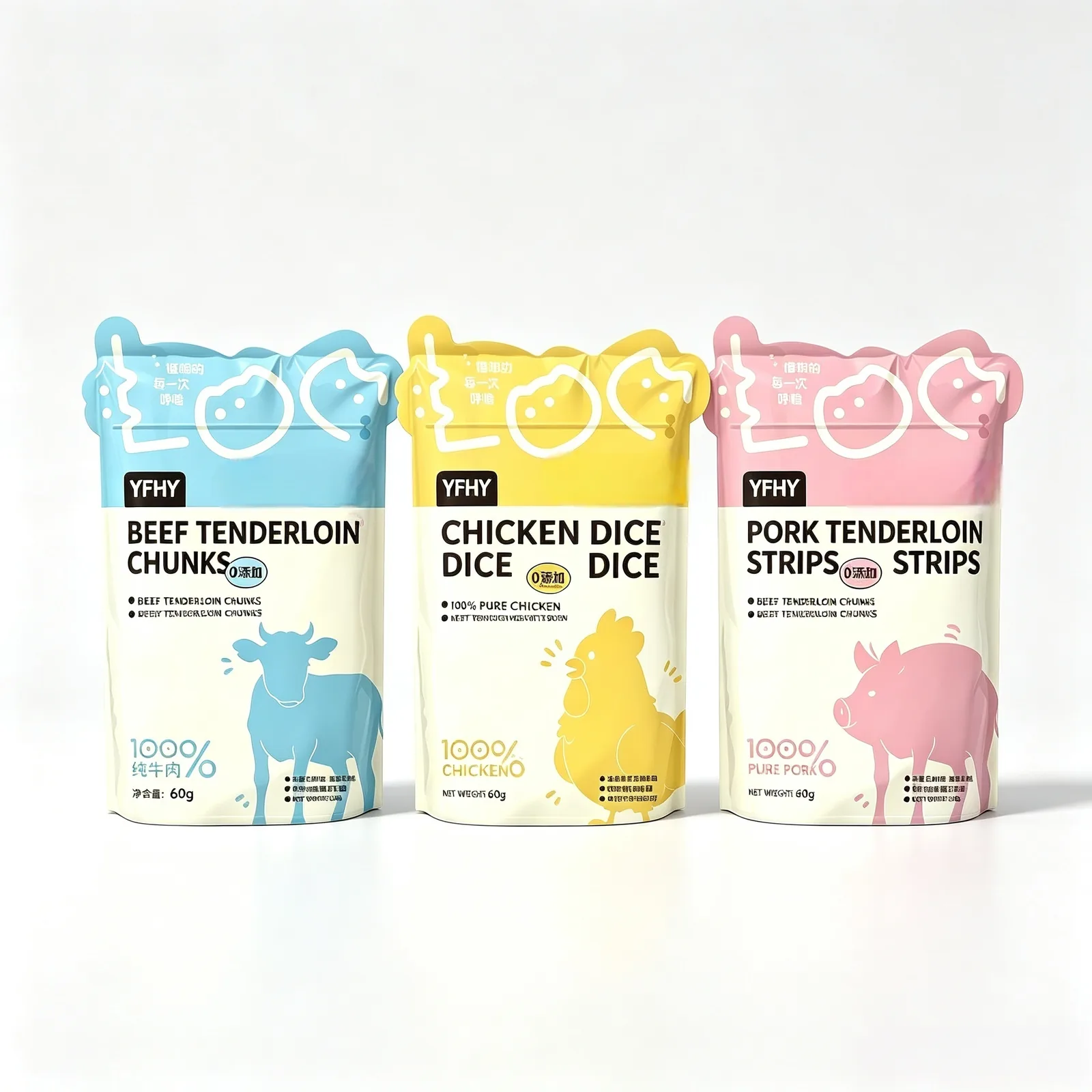
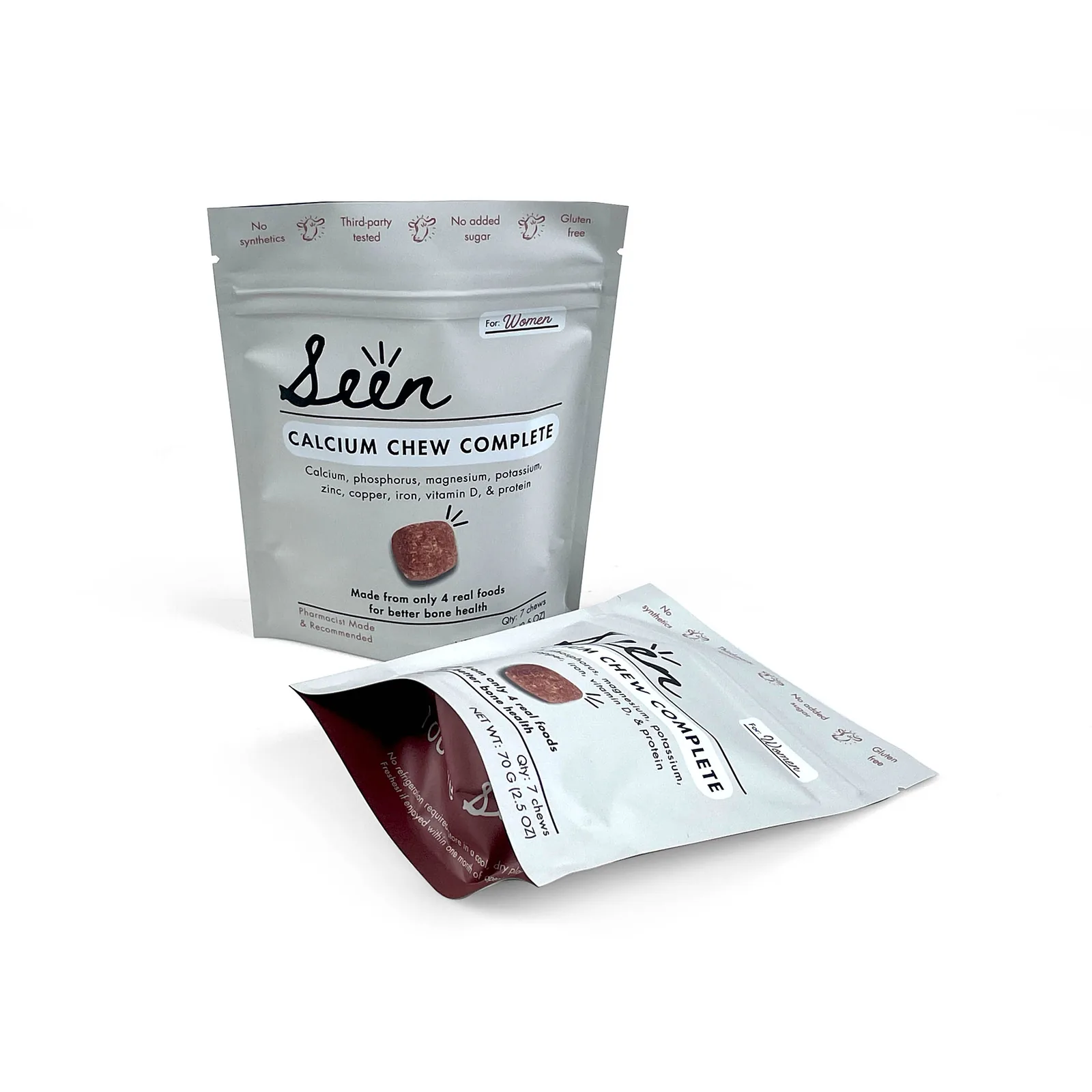
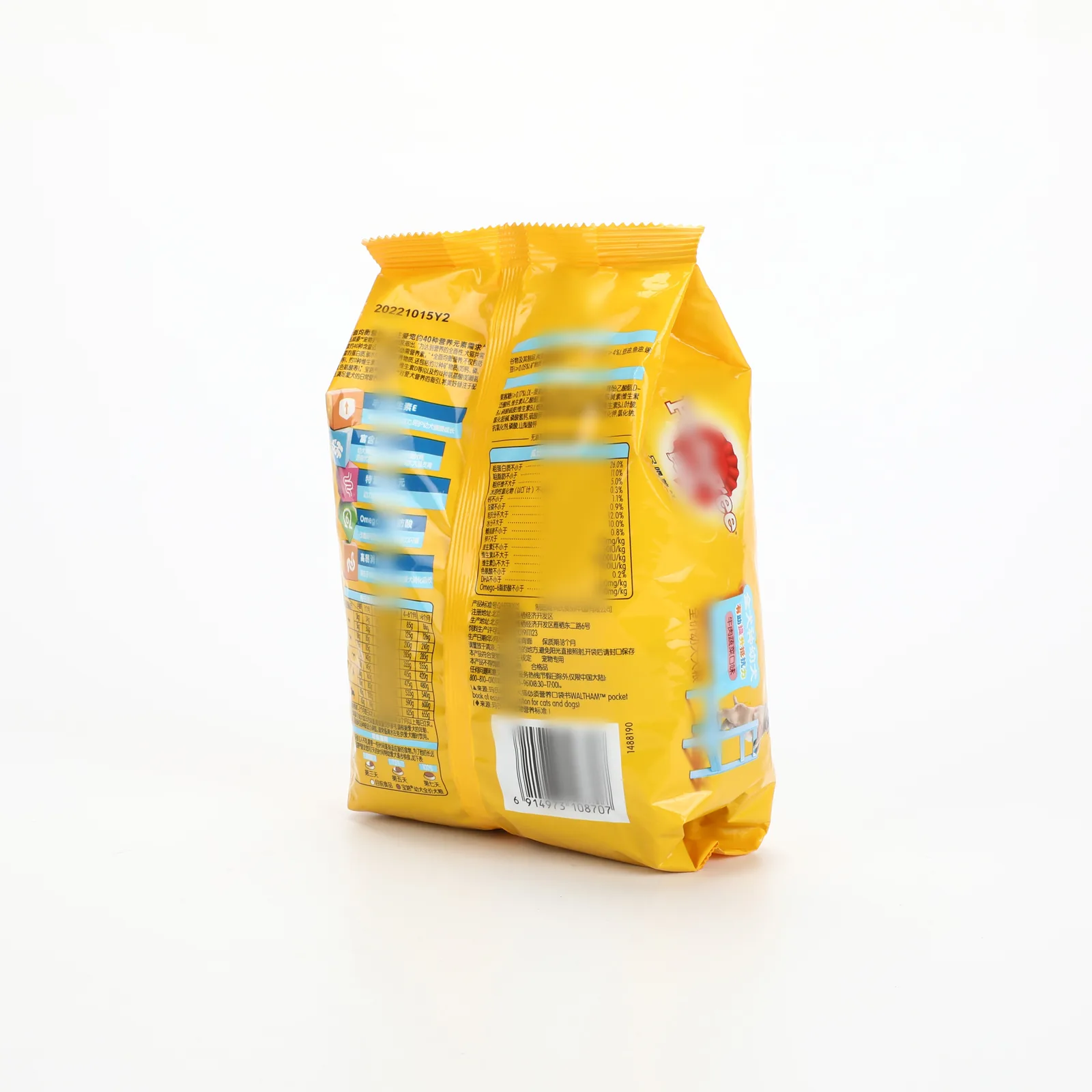
Format follows how the product is sold: bulk kibble in 1-15 kg needs a heavy-duty stand-up or side-gusset bag with a strong bottom; 250-1000 g retail needs a flat-bottom or stand-up pouch that stands on the shelf; treats and single portions work in zipper stand-up pouches; waste and litter lines use drawstring bags. Every format is made to order, so size, gauge and print are yours to set.
Material structures and barrier
We compound film in-house, which gives mill-direct pricing and full material traceability. For pet food the useful range runs from foil laminates for maximum shelf life to mono-PE recyclable structures where the brand needs kerbside recyclability - barrier is restored by coating rather than a foil layer.
Typical structures: PET/AL/PE for long-haul export and 12-month shelf life; PET/VMPET/PE where near-foil barrier is needed at lower cost; matte PET/PE for clear retail presentation; and mono-PE recyclable film for brands with a sustainability commitment.
Closures, valves and finishing
Zippers and sliders are applied in line, with tear notches and easy-tear options for treats. Printing runs up to 10-colour gravure with registration within 0.2 mm - small pet brands use this to put photography on the pouch, which sells more than text ever will.
Compliance for pet food buyers
Packaging is food-contact compliant and produced under BRC and ISO 22000 with full batch traceability, so retailer and export audits can be answered with paperwork, not promises. Finished goods are inspected to AQL 1.5 with batch documentation.
Products for this sector
Frequently asked questions
Do your pet food pouches meet food-contact rules?
Yes. Pet food is a food-contact application in our production: materials are food-contact compliant, produced under BRC and ISO 22000 with full batch traceability.
Can the pouches be resealed after opening?
Yes - press-to-close zippers, sliders or tin ties are fitted in line on stand-up, flat-bottom and side-gusset formats.
What barrier do dry pet food and treats need?
Oxygen, moisture and light are the main enemies: foil or metallised laminates for long shelf life, mono-PE recyclable structures when barrier is restored by coating. Tell us the fat content and shelf-life target and we will spec the film.
What is the lead time for custom printed pet food packaging?
Samples in 5-7 working days, production in 20-25 working days after approval, shipped from Qingdao Port.
Do you also make poop and litter waste bags?
Yes - compostable and PE drawstring waste bags, scented or unscented, printed and on-roll or flat packed.