Stand-up pouch vs flat pouch vs gusseted bag
Most buyers pick a pouch format from a photograph. The format is actually decided by four things — fill weight, product density, how the pack has to present on a shelf, and what your filling line can physically handle — and getting it wrong costs you either film area you did not need or a pack that falls over in the aisle.
Start with fill weight, not with the picture
Format follows volume. A pouch that is right at 200 g is usually wrong at 2 kg, and the failure mode is not subtle.
A flat pouch — two webs sealed on three or four sides, no base — is the cheapest structure per unit of product because it carries the least film for the volume it holds. It works up to roughly 500 g of a free-flowing product. Above that the pack goes soft, the seals take load they were not designed for, and it will not stand.
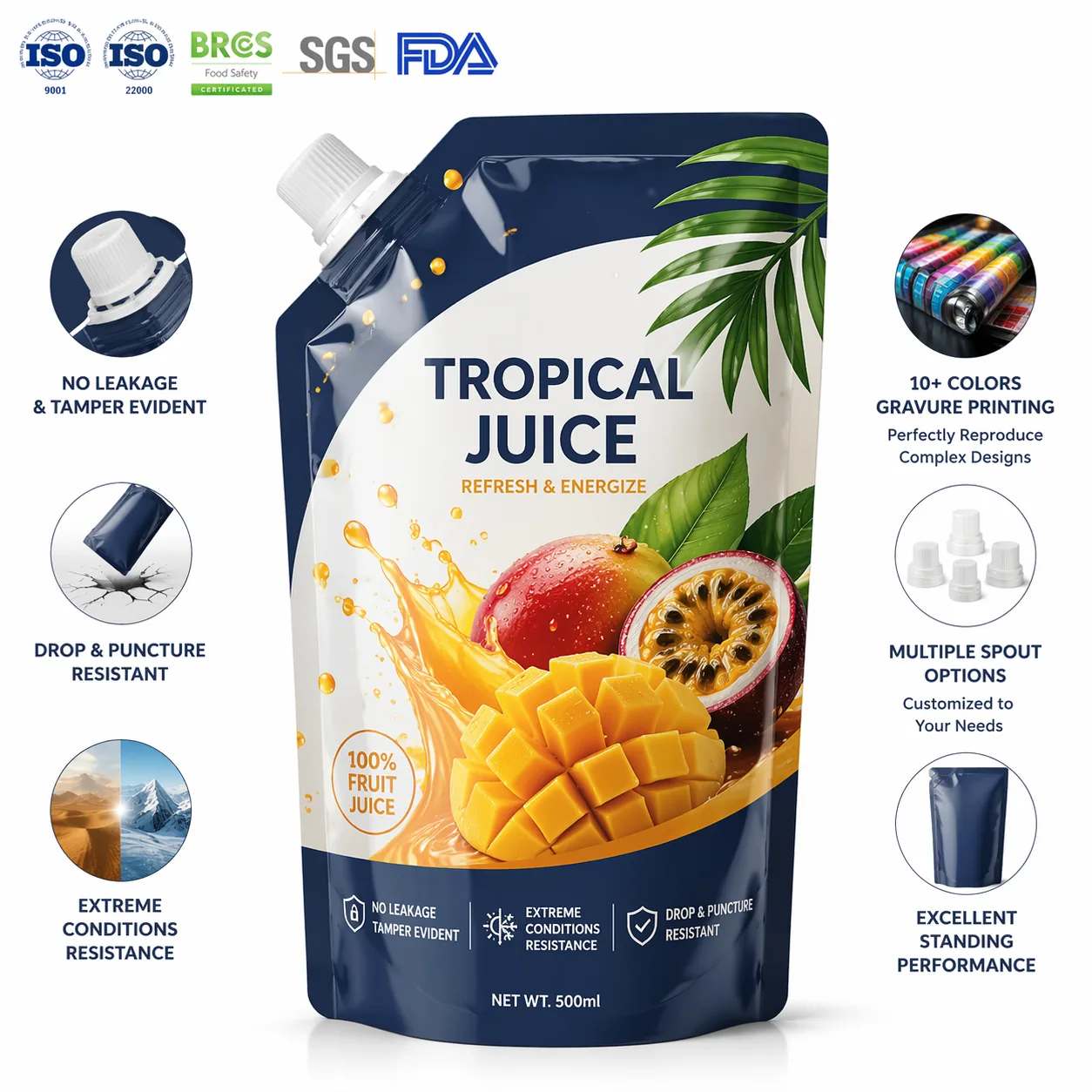
A stand-up pouch adds a folded base gusset that opens into a footprint under fill weight. That footprint is what lets it stand, and it is also the reason it costs more: the base fold consumes film that never becomes usable volume. Typical range is 100 g to 2 kg, and below about 100 g the base rarely opens properly under its own weight, so you get a pouch that was specified to stand and does not.
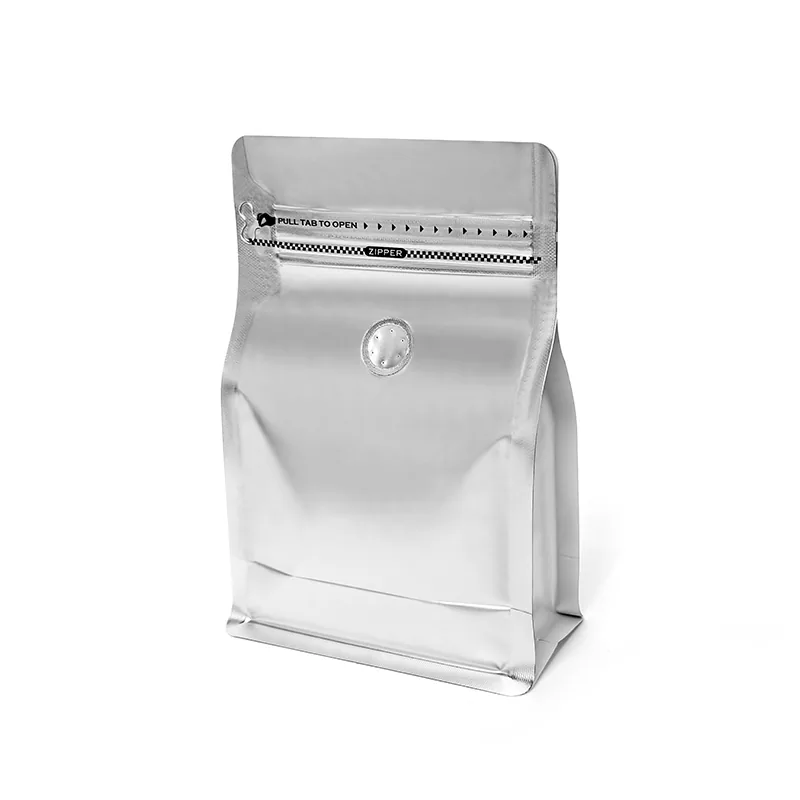
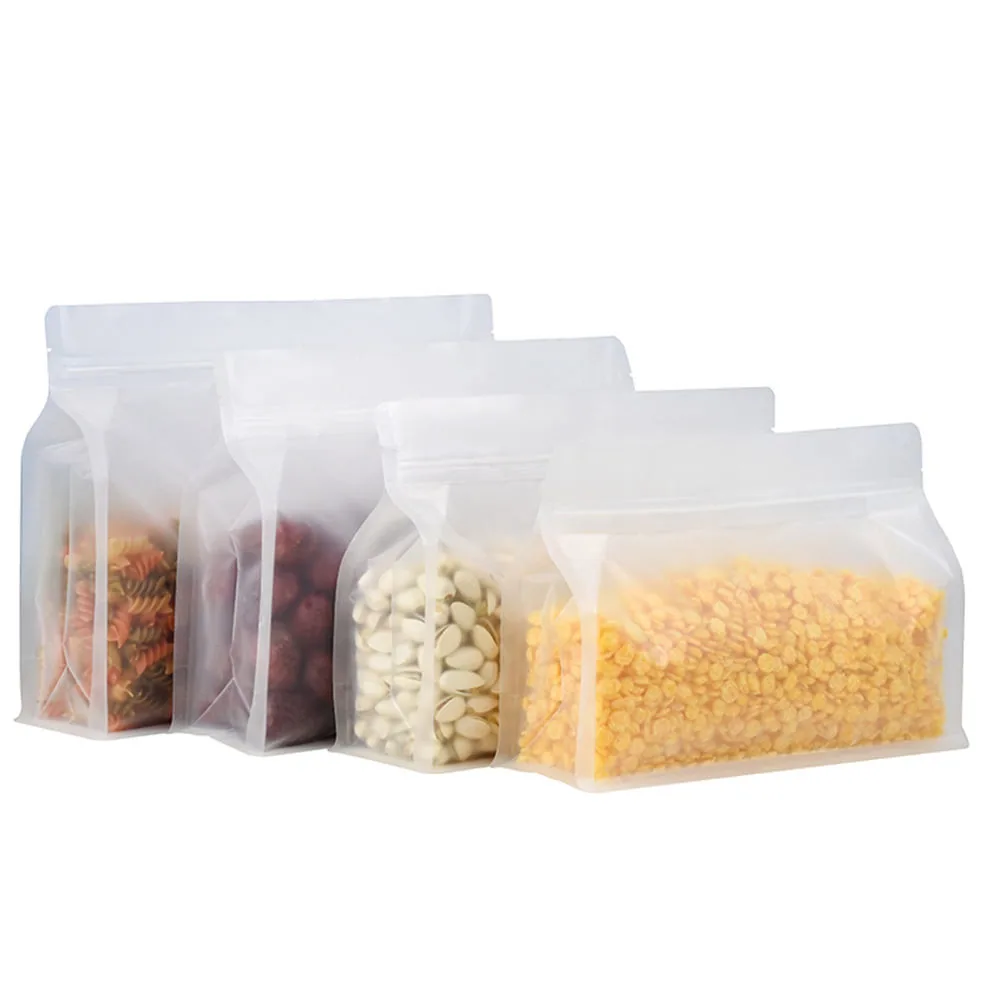
A gusseted bag — side gussets, bottom gusset, or a block bottom — is what you use above 2 kg, or when the product is dense enough that a stand-up base cannot carry it. It also gives you a flat printable side panel, which matters if the pack will be stacked on a pallet rather than faced on a shelf.
The honest version of this: if your product is 1 kg of coffee going onto a retail shelf, all three formats will physically work. The choice is then about shelf presence and cost, and we say so rather than pretending there is one right answer.
What each format costs you in film
The price difference between formats is mostly film area, and film area is something you can estimate before you ask anyone for a quotation.
For the same internal volume, a rough ordering holds almost everywhere:
- Flat pouch — baseline. Least film per litre, simplest tooling, fastest to run.
- Stand-up pouch — typically 15-25% more film area than the flat equivalent, because of the base gusset and the wider seal areas around it.
- Side-gusset bag — similar to or slightly above the stand-up, but the extra film buys you volume rather than a base, so cost per litre held can actually be better at large sizes.
- Block bottom / flat bottom — the most film and the most tooling. It is the premium format and it prices like one.
Those are film-area ratios, not price quotes. What turns them into a price is the structure, the print, and the order quantity — and at low quantities the plate or cylinder cost dominates everything above, which is why a format comparison at 5,000 units can invert completely at 200,000.
Closures change the arithmetic more than the format does
A zipper, a spout or a valve is frequently a larger line on the quotation than the difference between two formats.
A press-to-close zipper adds a component and a slower running speed. A child-resistant or slider zipper adds more of both. A degassing valve for coffee is a spot-applied component with its own scrap rate. A spout means a completely different fitment step.
Two consequences worth planning around. First, if the budget is tight, dropping from a stand-up to a flat pouch usually saves less than dropping a closure you did not need. Second, closures constrain format: a spout wants a stand-up or a shaped pouch, and a valve wants a panel flat enough to apply it to, which is one of the few genuine arguments for a gusseted bag over a stand-up.
The constraint most buyers find out about too late
Your filling line, not your brief, has the final say on format.
Pre-made pouches run on a pouch-handling machine that grips, opens, fills and seals. Its jaws have a size window, its opening station expects a particular base fold, and its seal bars are set for a particular film thickness. A format the machine was not set up for means a changeover, and sometimes means it simply will not run.
Form-fill-seal lines are the opposite case: they make the bag from roll stock as they fill it, which is cheaper at volume but restricts you to what that former can produce — usually pillow packs and side-gusset bags, not stand-up pouches with a shaped base.
Before a format is agreed, we ask for the machine make and model, the pouch size window it accepts, and the film thickness range its seal bars are set for. If you are hand-filling, say so — it removes most of these constraints and opens up formats that an automated line would reject.
A short decision path
If you want the compressed version, this is the order we work through it in.
- Under 500 g, no shelf-standing requirement, cost-led — flat pouch.
- 100 g to 2 kg, faced on a retail shelf — stand-up pouch.
- Over 2 kg, or dense product, or pallet-stacked rather than faced — gusseted bag.
- Premium shelf presence and the volume to absorb the tooling — block bottom.
- Existing automated line — whatever the machine's size window allows, and that check comes first.
Whichever format you land on, the barrier decision is separate and independent. A stand-up pouch is not more protective than a flat pouch; the structure inside it is what protects the product.
Common questions
Can a stand-up pouch hold 5 kg?
Physically some can, but the base gusset stops being the efficient way to carry that load. Above about 2 kg a bottom-gusset or block-bottom bag carries the weight with less film and a lower risk of base seal failure in transit.
Is a flat pouch always cheaper than a stand-up pouch?
Per unit at the same volume, almost always, because it uses 15-25% less film area. At low order quantities the difference can disappear entirely, because plate and cylinder costs are the same for both and dominate the unit price.
Does changing format mean new printing tooling?
Yes if the print area or the repeat changes, which a format change usually forces. Digital print avoids the tooling cost entirely and is worth pricing for short runs or for testing a format before committing.
Which format is easiest to make recyclable?
All three can be built mono-material. The flat pouch is the easiest because it has the fewest seal geometries to requalify; a shaped or block-bottom pack has more places where a stiffer mono-material film behaves differently from the laminate it replaced.
Where to go next
- Stand-up pouches
- Frosted CPE/EVA zipper bags
- Mono-material pouches: replacing PET/PE without losing barrier
- Send us a specification
- Vacuum food packaging bag guide
- Food packaging material selection
- Film thickness gauge and micron conversion
We answer every enquiry within 12 hours and issue a detailed quotation within 24 hours. Send us a specification.